Volumetric Calibration Protocols for Lyophilized Laboratory Research Compounds
Laboratory stock-solution calculations, final-volume controls, solvent compatibility and instrument calibration for lyophilized research compounds.
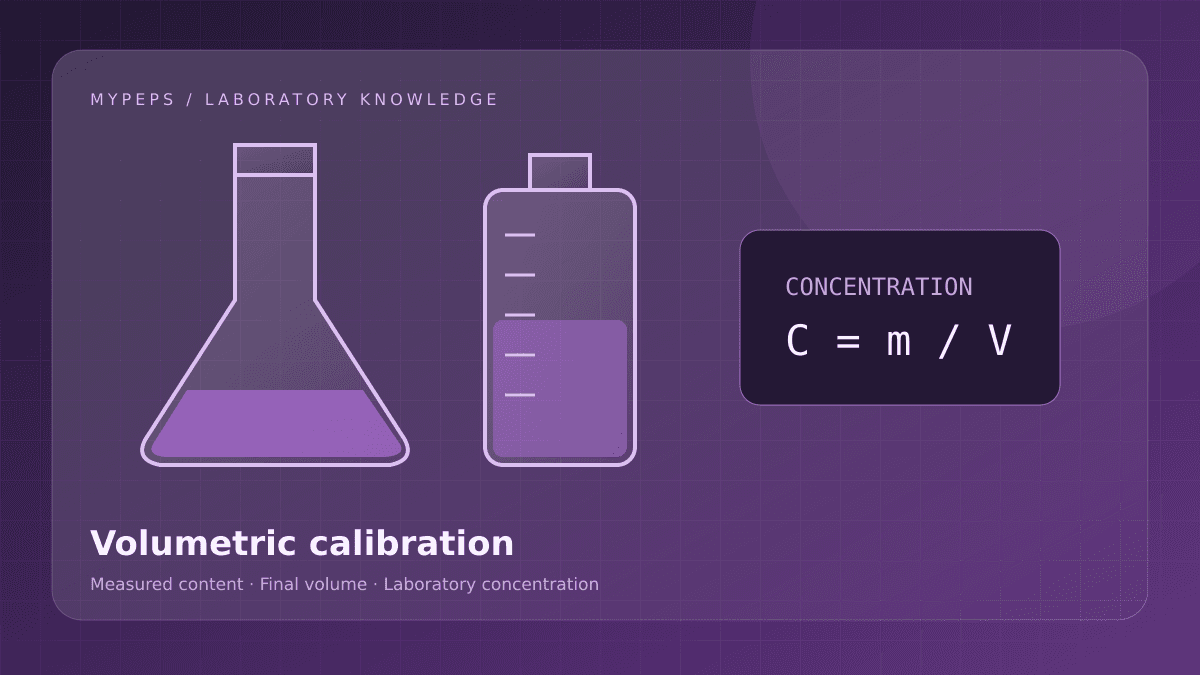
Define the analytical stock before selecting a solvent
Reconstitution converts a lyophilized material into a laboratory solution. A defensible preparation record identifies the analyte amount, solvent composition, final volume and relevant compatibility controls. The nominal vial declaration is a starting specification; it is not a substitute for a measured content value when quantitative accuracy is required.
- m · Analyte mass
- Mass of the specified compound in mg, on the assay basis applicable to the calculation.
- V · Final solution volume
- Total prepared solution volume in mL, rather than an assumed volume of solvent added.
- C · Mass concentration
- C = m / V, expressed in mg/mL. This is concentration, not the physical density of the solvent.
- Preparation basis
- Record whether mass is nominal, measured peptide content or gross material weight; these are not interchangeable.
Mass-to-volume calculations
The following examples describe laboratory stock solutions only. They assume the stated analyte mass is recovered and fully dissolved in the specified final volume. They are not instructions for administration.
= 5 mg/mL10 mg analyte in a final solution volume of 2 mL.
= 4 mLA 2.5 mg/mL target requires a final volume of 4 mL.
= 4 mg/mLAn 8 mg assay result changes the calculation even if the nominal declaration is 10 mg.
Diluting an analytical stock
For a compatible, homogeneous solution with conserved analyte mass, C₁V₁ = C₂V₂. Prepare to the required final volume under the laboratory’s validated volumetric procedure; do not equate a target final volume with an unverified addition of solvent.
| Stock concentration C₁ | Target C₂ | Final volume V₂ | Calculated stock volume V₁ |
|---|---|---|---|
| 5 mg/mL | 0.2 mg/mL | 10 mL | (0.2 × 10) ÷ 5 = 0.4 mL |
Incomplete dissolution, adsorption, transfer losses and degradation can invalidate an ideal mass-balance assumption. Where the assay depends on concentration accuracy, verify recovery using an appropriate analytical method.
Solvent compatibility and preservative composition
A formulation identified as bacteriostatic water containing 0.9% benzyl alcohol contains 9 mg/mL of that preservative when expressed as weight per volume. The benzyl-alcohol concentration is distinct from the concentration of the research compound.
Bacteriostatic water is not a default solvent for every peptide or analytical method. Verify the exact product composition, supplier compatibility information and the receiving laboratory’s validated procedure before use.
Method compatibility takes precedence
Peptide solubility depends on its chemical characteristics and the preparation conditions. Additives may affect separation, detection or the intended experiment. A preservative does not remove endotoxin or establish the sterility of a subsequently prepared solution. Record the solvent lot and avoid assuming that a clear appearance proves chemical stability.
Mechanical handling and preparation traceability
Vigorous mixing can introduce foaming and additional air–liquid interfaces. Whether that exposure causes aggregation, adsorption or other changes depends on the compound and formulation. It is not scientifically accurate to state that shaking universally breaks peptide chains.
Use the supplier’s handling instructions and a validated mixing procedure appropriate to the material. Do not improvise elevated temperature, pH changes or extended agitation to force dissolution without assessing their effects.
- Material record
- Compound identifier, batch, nominal declaration, assay basis and analytical reference.
- Preparation record
- Solvent and lot, final volume, preparation time, container and the applicable method identifier.
Multi-dose mechanisms are not automatic analytical calibration
A pen mechanism controls mechanical travel and nominal liquid displacement. It does not directly measure analyte mass. Cartridge geometry, dead volume, backlash, fluid properties and the device’s specified tolerances affect performance.
For a permitted laboratory use, assess compatibility and validate delivered volume with an appropriate reference method. A gravimetric assessment requires the fluid density and controlled measurement conditions. Do not treat a dial setting as an independently verified mg value, or substitute an unvalidated device for calibrated volumetric equipment.
Primary references and applicability
These references provide technical context. The original batch report, supplier instructions and your validated laboratory method govern a particular material. This article does not establish a universal specification or stability period.
- Bachem: peptide content and concentration calculator
- MilliporeSigma: synthetic peptide handling and solubility
- DailyMed: formulation label identifying benzyl-alcohol content
References reviewed: . Report a correction through MyPeps Support.